Custom Software Development: The Complete Guide for Businesses
Most software problems do not begin as software problems.
They begin when a growing business starts feeling friction in places that once seemed manageable. A sales team spends too much time updating systems instead of closing deals. Operations rely on spreadsheets to bridge gaps between platforms. Leadership waits days for reports that should take minutes. Small delays become recurring patterns.
Nothing appears broken on the surface. But underneath, the business is working harder than it should.
This usually happens when technology has been added in layers rather than designed as a system. One tool for CRM. Another for operations. Another for reporting. Each solved an immediate need, but together they created complexity no one planned for.
That is the point where many companies start rethinking their approach.
Not because they suddenly need more software, but because they need software that actually fits the way they operate.
Custom software development is often the next step in that journey.
Why Growing Businesses Outgrow Generic Software
Off-the-shelf tools have an important place in modern business. They help companies move quickly, avoid large upfront investments, and solve common problems without lengthy implementation cycles.
For many early-stage teams, that is exactly the right decision.
The challenge appears later.
As companies grow, their operations become more nuanced. Processes that were once simple now involve multiple departments, approvals, exceptions, integrations, and data dependencies. What worked well for a smaller business starts feeling restrictive in a more complex one.
A CRM may handle leads well, but struggle with a unique sales process. A reporting tool may provide dashboards, but fail to connect data from every source that matters. An operations platform may cover standard workflows, while the real work still happens in spreadsheets and email threads.
These gaps rarely appear all at once. They build gradually.
At first, teams compensate with manual steps. Then they create side processes. Eventually, the business begins adapting itself to the limitations of software instead of using software to improve how it works.
That is usually the turning point.
Signs Your Current Systems Are Slowing Growth
The need for custom software often becomes clear through operational signals rather than technical complaints.
You may notice teams duplicating work across systems. Reporting may take longer than it should. New ideas may feel difficult to implement because existing tools cannot support them. Costs may rise as more software is added, yet efficiency does not improve at the same pace.
When these patterns become consistent, the issue is rarely a single tool. It is the overall architecture behind how the business operates.
What Is Custom Software Development?
Custom software development is the process of designing, building, and maintaining software around a business’s specific workflows, users, and requirements. It can include internal tools, customer portals, and systems that connect existing applications.
Instead of purchasing a product built for broad market use, companies create systems tailored to their workflows, priorities, and operating model. The goal is not to build more software. It is to build the right software.
That distinction matters.
A custom platform can reflect how approvals actually happen inside your business. It can connect the systems your teams already use. It can surface the metrics leadership truly cares about. It can evolve as your business model changes.
In other words, custom software is less about code and more about alignment.
How It Differs from Off-the-Shelf Software
Off-the-shelf products are designed for standardization. They need to serve thousands of customers with similar needs, which means features are generalized and flexibility is limited.
Custom software works differently.
It is designed around your business context. Decisions are made based on your workflows, your users, your data model, and your growth plans. You are not waiting for a vendor roadmap to prioritize what matters to you.
That level of control becomes increasingly valuable as complexity grows.
What Is Custom Platform Development?
Custom platform development brings related workflows, users, and data into a shared software system built around a business’s requirements. Examples include customer portals, supplier marketplaces, internal operations platforms, and SaaS products serving multiple organizations.
For example, a distributor might need stock availability, customer pricing, quote approvals, and order tracking connected in one platform. The work involves defining how those processes interact, who can access each function, and how information moves between existing systems.
Before building, identify the essential workflow, required integrations, data ownership, and first-release scope. An existing product with suitable integrations may still be sufficient. A custom platform becomes worth considering when important requirements cannot be met reliably through configuration alone.
When Custom Software Makes Sense
Most companies do not wake up one day and decide to build custom software. The decision usually builds gradually.
Custom development is not the right move for every company. In many cases, ready-made tools remain the most practical option.
The shift toward custom solutions usually makes sense when business requirements become too specific, too complex, or too important to compromise.
Complex Workflows
Some companies operate in ways that create real competitive advantage. Their processes are not generic, and they should not be forced into generic systems.
When software cannot support the way value is created inside the business, custom development becomes a strategic option.
Rapid Growth
Growth changes the demands placed on technology.
Systems that perform well for a small team often struggle under higher transaction volumes, larger teams, and more complex reporting needs. What once felt efficient can quickly become a bottleneck.
Compliance and Data Control
Industries such as healthcare, finance, insurance, and logistics often require stronger control over security, auditability, and data handling.
In these environments, relying entirely on third-party platforms can introduce limitations that are difficult to accept long term.
Heavy Integration Requirements
Many businesses depend on multiple systems working together. CRM, ERP, analytics, customer platforms, finance tools, and operational software all need to exchange information reliably.
When integrations become central to the business, custom architecture often creates a stronger foundation.
What Businesses Actually Build
When companies move toward custom development, they are not always building entirely new systems. More often, they are restructuring how their technology stack works as a whole.
Sometimes that means consolidating multiple tools into a single platform. Other times it involves creating a layer that connects existing systems in a more meaningful way.
In operational-heavy industries, custom platforms often revolve around workflows. How orders move. How inventory is tracked. How teams collaborate across functions.
For customer-facing businesses, the focus shifts toward experience. Faster interactions, smoother journeys, better engagement.
Increasingly, there is also a growing emphasis on intelligence. Systems are no longer expected to just store and process information. They are expected to interpret it. Suggest actions. Reduce manual effort.
This is where automation and AI start playing a larger role. Not as standalone features, but as integrated parts of the system.
Should Your Business Choose Custom Software or SaaS?
SaaS can be a practical choice when an existing product meets your requirements, while custom software deserves consideration when essential workflows or integrations need a tailored solution. Many businesses combine both approaches, using standard tools for common tasks and custom applications where their requirements differ.
For a closer look at business fit and long-term ownership costs, read our custom software vs off-the-shelf software comparison.
The Real Investment Behind Custom Software
Custom software is often judged by its upfront cost. That is understandable, but incomplete.
The more important question is what the business is currently paying for inefficiency.
Manual work consumes time. Fragmented systems slow decisions. Poor visibility creates missed opportunities. Teams spend energy managing tools instead of moving the business forward.
These costs are real, even when they do not appear as a line item.
A well-built custom system can reduce those hidden costs by improving workflow speed, data accuracy, and operational clarity. It can also replace overlapping subscriptions and reduce dependency on disconnected tools.
Over time, the conversation shifts from cost to capability.
Unlike subscription software that remains rented infrastructure, custom software becomes an asset the business can continue improving.
How Is Custom Software Developed?
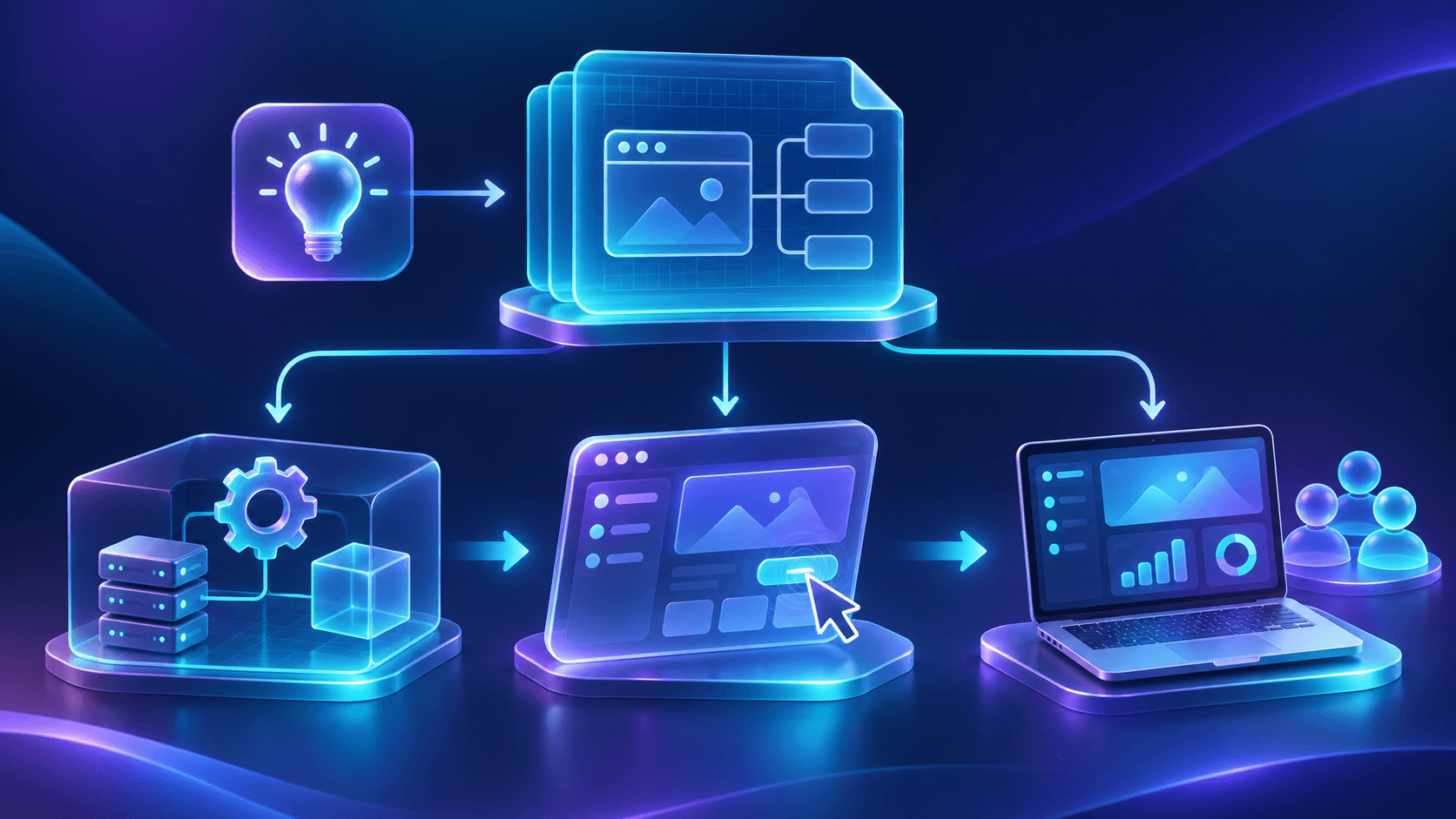
Custom software development starts with understanding users, workflows, and business goals. The team then defines the first-release scope, designs the solution, builds and tests it, and prepares for launch and ongoing support. Reviews throughout the project help the business confirm that the application meets the agreed requirements.
Our application development process guide explains the six stages in more detail, including what your team should review and approve before moving forward.
Common Mistakes Businesses Make
The value of custom software is real, but execution matters.
One common mistake is trying to build too much too early. Large feature lists may feel ambitious, but they often create unnecessary delays. Starting with the highest-value version usually leads to better outcomes.
Another issue is choosing a partner based only on price or technical claims. Delivery teams need to understand business context, communicate clearly, and make thoughtful decisions throughout the project.
There is also the human side of change.
Even strong systems fail when adoption is ignored. If users are not involved, trained, or considered in the design process, the software may be technically sound and commercially disappointing.
The Role of AI in Modern Custom Software
Business software is no longer expected to simply record transactions and display reports.
Increasingly, companies want systems that help teams work smarter.
That is where AI is creating meaningful impact.
Custom platforms can now classify documents automatically, surface recommendations, predict patterns, generate summaries, assist customer interactions, and reduce repetitive manual tasks.
The most effective use of AI is not adding novelty features. It is improving real workflows where time, speed, and decision quality matter.
For businesses investing today, the opportunity is not just to build software, but to build smarter systems from the start.
How Pinnacloid Helps Businesses Build the Right Systems
At Pinnacloid, software projects are approached as business initiatives first and technical initiatives second.
The starting point is understanding how the company operates, where friction exists, and where technology can create measurable leverage. In some cases, that means building a platform from the ground up. In others, it means modernizing existing systems, integrating disconnected tools, or introducing automation in the right places.
The approach depends on the problem, not a fixed template.
Whether the need is a defined project, a dedicated product team, or specialist engineering support, the objective remains the same: build systems that improve how the business performs.
Explore our application development services to see how Pinnacloid supports web, mobile, desktop, and custom business applications, including backend development and system integrations.
Final Thoughts
Custom software is not something every business needs immediately.
But for growing companies, there often comes a point when existing tools stop enabling progress and start limiting it.
That moment matters.
Because once technology becomes a constraint, continuing to patch around the problem is rarely the most efficient path forward.
The businesses that scale well are usually the ones that recognize when their next stage of growth requires systems built for where they are going, not where they started.